Mothman

Cryptid MOTHMAN

Mothman

A towering winged figure with glowing red eyes, Mothman first emerged from the shadows of Point Pleasant, West Virginia, in 1966. Haunting witnesses and sparking mass panic, this mysterious entity has been tied to disaster, prophecy, and the supernatural. Whether viewed as a harbinger or protector, the Mothman legend continues to captivate and terrify.

point pleasant

The Point Pleasant Sightings

Between November 1966 and December 1967, dozens of residents in Point Pleasant reported encounters with a large, humanoid creature with massive wings and glowing red eyes. The most famous account came from two couples who claimed the creature chased their car near an abandoned TNT plant. As reports increased, fear spread throughout the town. The panic reached its peak with the tragic collapse of the Silver Bridge on December 15, 1967, an event many believe is connected to the Mothman legend.

Prophet of Doom or Misunderstood Entity?

The Mothman became widely known beyond West Virginia after John Keel’s 1975 book The Mothman Prophecies, which linked the sightings to paranormal phenomena and strange coincidences. Some believe Mothman is a warning sign of impending catastrophe, appearing before tragic events. Others think it is an interdimensional being or simply the result of mass hysteria. Whatever its origins may be, the Mothman defies easy explanation.
Mothman 1

Legacy and Lore

Mothman’s story has endured for decades and evolved from a local mystery into a global legend. Point Pleasant now hosts an annual Mothman Festival that draws thousands of believers and skeptics alike. The creature has inspired documentaries, films, and countless pop culture references, from eerie murals to its own statue. As stories of winged humanoids continue to spread across the globe, one thing remains clear: Mothman is more than just a West Virginia myth. It is a modern-day mystery.

With every red-eyed sighting and spine-tingling story, the legend of Mothman continues to grow. Whether an omen of disaster, a misunderstood cryptid, or something far stranger, Mothman’s eerie presence in our collective imagination is here to stay.

Aliens

Cryptid ALIENS

Aliens

From ancient carvings to modern military encounters, reports of alien life visiting Earth have captivated the human imagination. Whether portrayed as mysterious lights in the sky or beings from distant galaxies, the idea of extraterrestrial visitors continues to spark curiosity, fear, and debate across the world.

UAP Image

Sightings and Close Encounters

Reports of strange lights and unidentified flying objects have spanned centuries, but modern alien lore exploded in 1947 with the alleged crash in Roswell, New Mexico. Since then, thousands of sightings have been reported, including the famous Phoenix Lights, the Rendlesham Forest incident in England, and the Tic Tac encounter documented by U.S. Navy pilots. Witnesses describe flying crafts, humanoid beings, and even abductions — experiences that defy easy explanation.

From Cover-Ups to Congressional Hearings

For decades, alien sightings were dismissed as hoaxes or misidentified aircraft. That began to change when governments, particularly in the United States, began declassifying military footage and confirming that some unidentified aerial phenomena remain unexplained. In 2023, a U.S. congressional hearing brought forward whistleblowers who claimed the government possesses non-human biological materials. While the truth remains murky, public interest in extraterrestrial life has never been stronger.

UAP Hearing

Aliens in Pop Culture and Science

The concept of alien life has permeated every corner of pop culture — from 1950s sci-fi films to modern blockbusters and video games. At the same time, real scientific efforts like the SETI Institute and NASA’s exoplanet missions continue to search for signs of intelligent life beyond Earth. Whether you believe in secret visitors or think the truth is still out there, aliens have become a symbol of both our fears and our hopes for the unknown.

Are we alone in the universe? Or have we already been visited? The question remains open, fueled by eyewitness accounts, official reports, and unexplained phenomena. As technology advances and exploration deepens, humanity continues to look to the stars for answers.

Chupacabra

Cryptid CHUPACABRA

Chupacabra

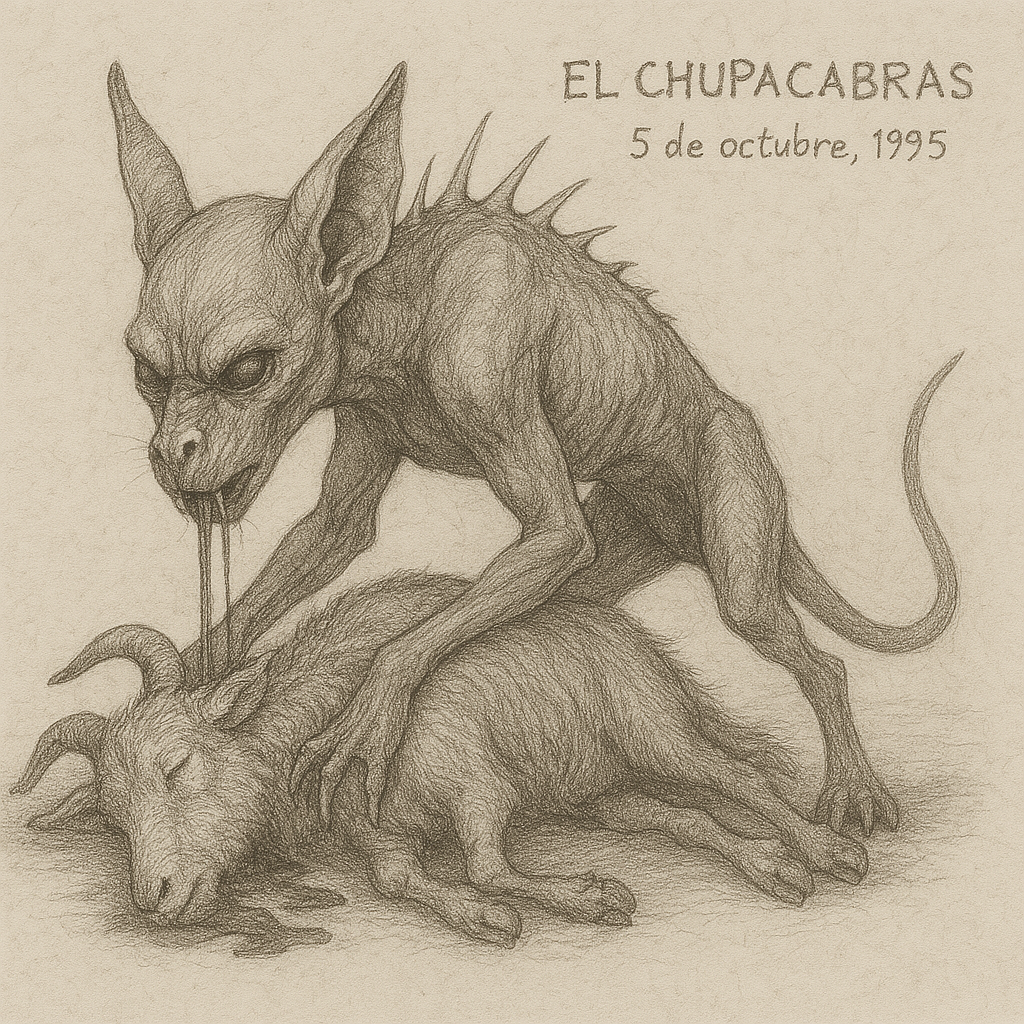
Feared across the Americas, the Chupacabra, or “goat sucker”, is a modern cryptid that shot to fame in the mid-1990s. Described as a blood-sucking creature that preys on livestock, especially goats, the Chupacabra is said to leave behind a trail of drained animals and terrified witnesses. Its form? Reports vary wildly, from a spiky-backed reptilian beast to a hairless, canine-like predator.

Chupacabra Goat Sketch

Origins and Early Sightings

The legend of the Chupacabra originated in Puerto Rico in 1995 when multiple farmers reported dead animals with puncture wounds and no blood left in their bodies. Witnesses described a strange, alien-like creature with leathery gray skin, sharp spines along its back, and glowing red eyes. As media attention grew, sightings spread across Latin America and the southern United States, sparking widespread fascination and fear.

From Myth to Mutation

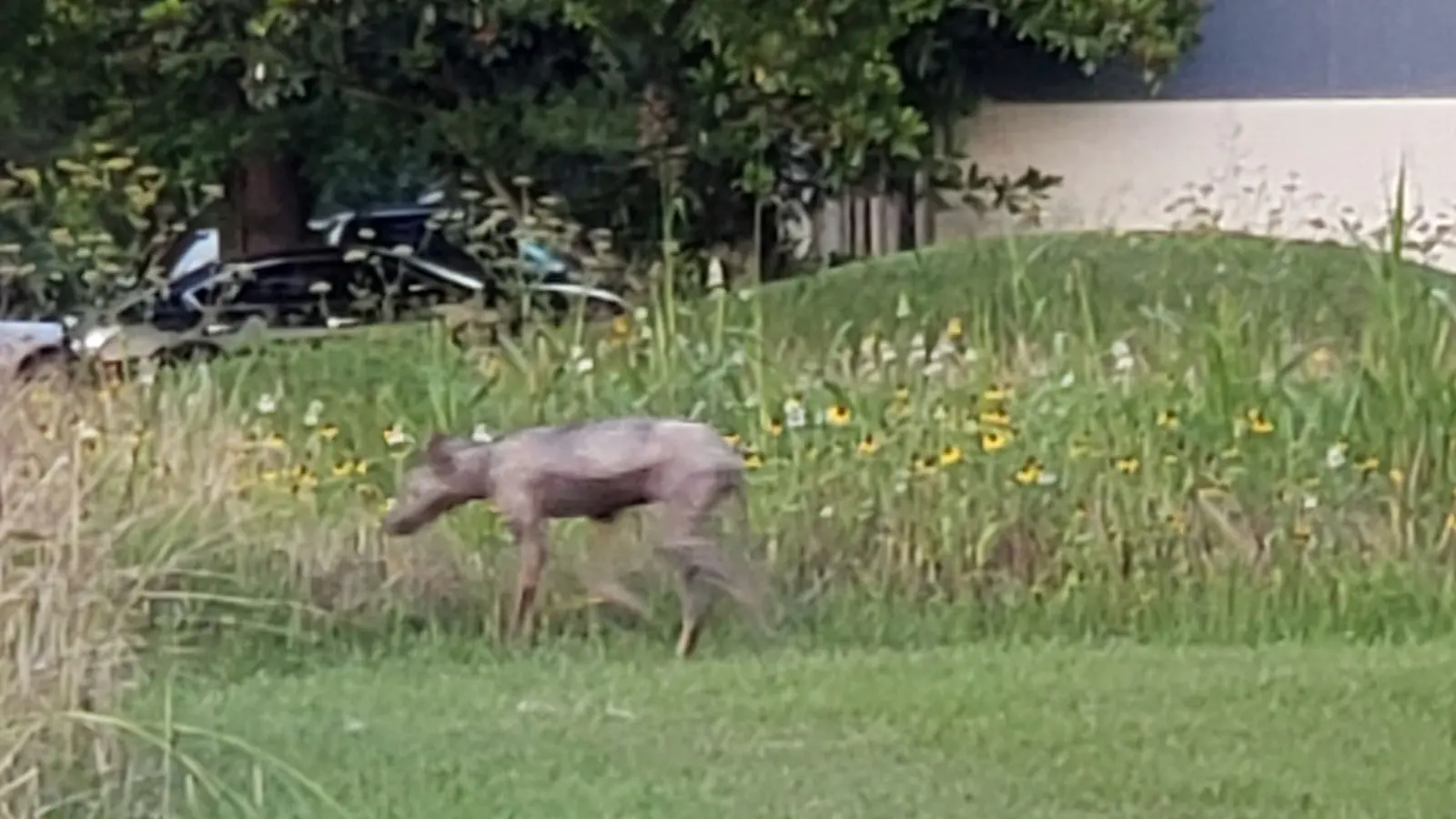
In the 2000s, the Chupacabra myth took a new turn. Sightings in Texas and Mexico described a hairless, dog-like creature with mangy skin and unusual features. Biologists later linked these reports to coyotes with severe mange. While some believe the Chupacabra is a misidentified animal, others insist it’s a separate species — possibly a government experiment gone rogue or a cryptid yet to be classified.

elmendorf beast

A Cryptid or Cultural Icon?

The Chupacabra isn’t just a cryptid — it’s a pop culture phenomenon. It’s appeared in books, TV shows, cartoons, and documentaries, embodying everything from fear of the unknown to urban legends in the internet age. Whether it’s a warning tale, a misunderstood creature, or a real blood-sucker still on the loose, the Chupacabra remains a powerful and evolving piece of modern folklore.

From the hills of Puerto Rico to the deserts of Texas, the Chupacabra’s legend continues to evolve. Some scientists write it off as myth, while others remain open to the possibility that something truly strange stalks the night. One thing’s for sure — until there are definitive answers, the hunt continues.


Bigfoot

Cryptid BIGFOOT

Bigfoot

Elusive, legendary, and cloaked in mystery. Bigfoot is one of North America’s most iconic cryptids. Reported sightings span centuries, with accounts describing a massive, bipedal creature covered in hair and roaming the remote forests of the Pacific Northwest. Is it myth? Misidentification? Or an undiscovered primate species hiding in plain sight? Maybe something even stranger…

bigfoot roger patterson 1 h

Origins and Indigenous Lore

Stories of Bigfoot-like creatures existed long before the name “Bigfoot” entered the public lexicon. Indigenous tribes across North America have passed down tales of large, hairy forest beings for generations. The Salish people of the Pacific Northwest speak of “Sasq’ets,” a term from which the modern name Sasquatch is derived. These stories often described a being that was more guardian than monster: a protector of the wild.

The Patterson–Gimlin Film

In 1967, Roger Patterson and Bob Gimlin captured what is arguably the most controversial footage in cryptozoological history. Shot in Bluff Creek, California, the short film shows a creature walking upright across a clearing before disappearing into the woods. While skeptics call it a hoax, experts have debated the footage’s authenticity for decades due to the creature’s biomechanics and muscle movement.

Film Frame

Evidence, Hoaxes & the Hunt for Truth

From casts of enormous footprints to blurry trail-cam images, evidence of Bigfoot continues to emerge. While many have been debunked as hoaxes, some remain unexplained. Researchers known as “Squatchers” dedicate their lives to investigating sightings and strange sounds in the wild. Whether you’re a believer or skeptic, Bigfoot’s cultural impact is undeniable, inspiring books, TV shows, festivals, and ongoing debate in scientific communities.

Bigfoot remains one of the most enduring mysteries in modern folklore. With thousands of reported sightings across the U.S., especially in the Pacific Northwest, Appalachian Mountains, and Great Lakes region, the legend shows no signs of fading. As long as there are unexplored forests and curious minds, the search for Bigfoot will continue.